Bernard Poduska said, “We do not enter marriage empty handed; we carry a lot of “baggage” with us…we bring our levels of self-esteem, our willingness to adapt to change, our attitudes toward life, and our expectations and values” (Till Death Do Us Part, chapter 2)

When I chose to marry my husband, I thought that our life would be very easy and happy, because we were two returned missionaries. Soon I learned that marriage was wonderful, but the time of adaptation to a new family was not an easy task. My husband had different implicit and intuitive rules than me. We worked a lot to accept us as we were and to define new rules for our new family. Marriage councils were a tool to talk about our goals and our rules.
On the other hand, I didn’t think about the impact that would have our families of origin in our marriage, sometimes mothers-in-law wanted to advice us how to educate our  children, or like my mom who called me at least 5 times a day. There were hard moments with our mothers-in-law, but I remembered the words of Elder Octaviano Tenorio who said, “If the Holy Ghost has confirmed that your boyfriend is the one, when you will get married and the problems will come, you will know that the solution is not divorce, but repentance. The Holy Ghost is a God and He is never wrong.” I am very grateful for those words that helped me to improve my relationship with my husband and my mother in-law. She was a wonderful woman. My husband has been very patient with my family. He has accepted me as I am, but has enhanced my life too. We have formed a strong family with our own rules and an eternal perspective.
I am committed to be a good mother-in-law for my future son and daughter-in-law. I commit to help them in their marriage and not be intrusive or trying to advice them how to live their lives, but just loving them.



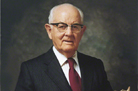 eturn to their mothers and fathers to obtain advice and counsel and to confide, whereas cleaving should be to the wife in most things, and all intimacies should be kept in great secrecy and privacy from others… Your married life should become independent of her folks and his folks. You love them more than ever, you cherish their counsel, you appreciate their association, but you live your own lives, being governed by your decisions, by your own prayerful considerations after you have received the counsel from those who should give it (Spencer W. Kimball, March 1977 Ensign, pp. 4, 5).
 Successful Marriages